
30 Days travel spanish challenge
22 September 2026
Things I Wish You Knew Before Traveling to Latin America
Traveling through Latin America can be an incredible experience. From the food and landscapes to the people you meet along the way, there is so much to discover. But there are also a few things I wish every traveler knew before arriving.
As a Spanish teacher working with travelers for more than 18 years, of course, I’ve seen how learning even a little Spanish can change the way people experience a place. It helps you feel more confident, understand local culture, and connect with people beyond the typical tourist experience.
So, before you pack your bags and head to Latin America, here are five things I want you to keep in mind.
1. Latin America Is Not One Big, Identical Place
One of the most important things to understand before traveling to Latin America is that every country has its own identity.
Spanish sounds different depending on where you are. Vocabulary, accents, food, daily routines, and social customs can change from one country to another. Even within the same country, you may notice significant regional differences.
For example, an expression you hear in Ecuador might not be commonly used in Mexico or Argentina. The way people greet each other, the food they recommend, or the rhythm of daily life may also be different.
Instead of arriving with fixed expectations, try to approach each destination with curiosity.
For example:
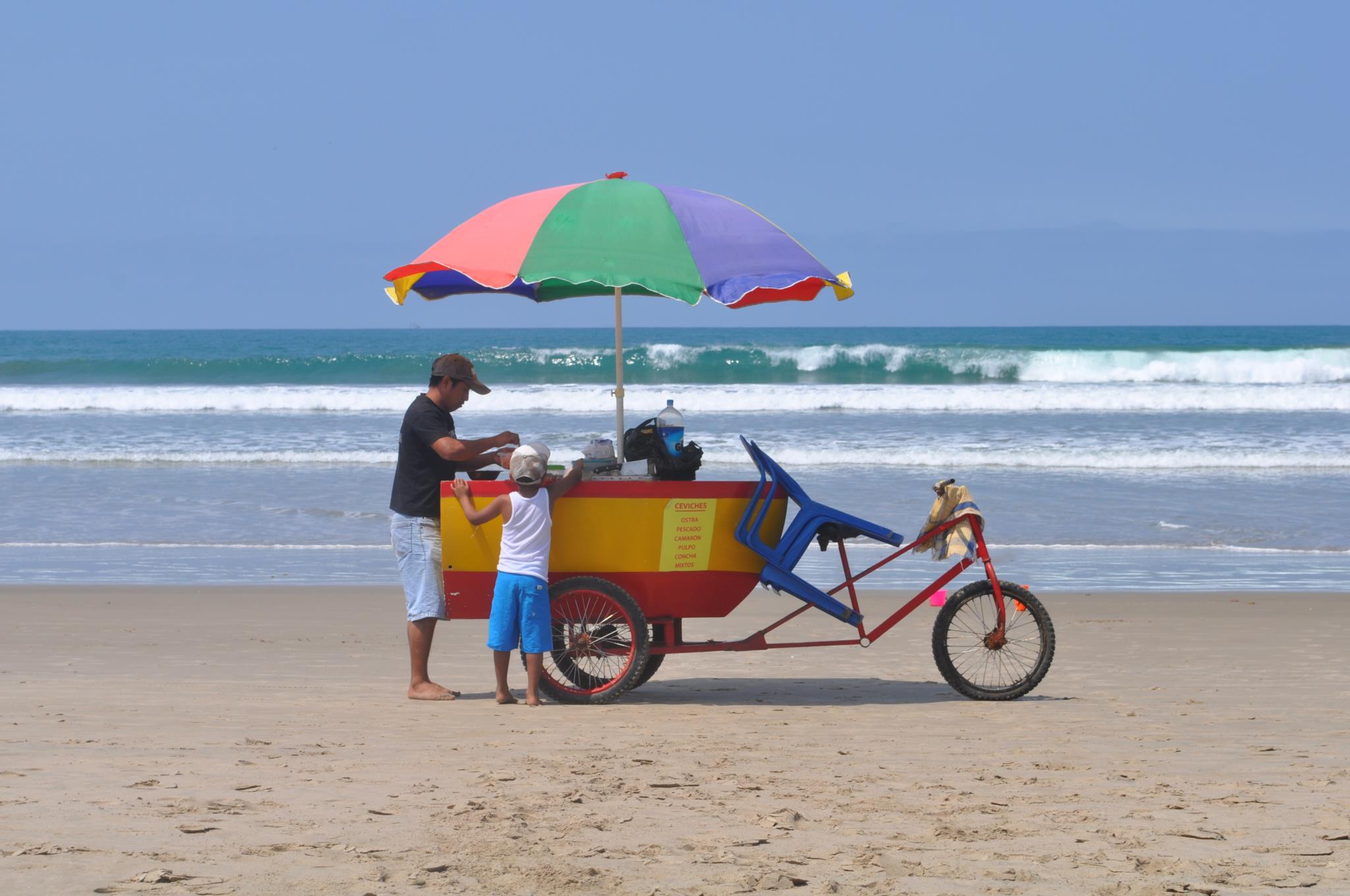
In Ecuador, at the coast we eat lots of seafood, fish, shrimps, at the mountains "sierra", we eat more potatos, pork, meat. Even the encebollado, one of our traditional foods, fish soup at the coast, people eat it with bread and on the mountains we eat it with popcorn and corn, this is something people wont understand!
2. The Spanish You Learn in Class Is Not Always the Spanish You Hear on the Street
You might study Spanish for months before your trip, practice grammar, learn vocabulary, and feel confident completing exercises. Then you arrive in Latin America, someone starts speaking to you, and suddenly you can't understand half of what they're saying.
Don't panic. This is completely normal!
Real conversations are different from classroom exercises or duolingo. People may speak quickly, shorten words, use local expressions, or talk while surrounded by traffic, music, and other conversations.
Not understanding everything doesn't mean your Spanish is bad. It means you're learning how Spanish works in real life.
Instead of pretending you understand, use these expressions to keep the conversation going:
-
“¿Me lo puedes repetir, por favor?” — Can you repeat that, please?
-
“¿Puedes hablar un poquito más despacio?” — Can you speak a little more slowly?
-
“Entiendo más o menos, pero esa palabra no la conozco.” — I more or less understand, but I don't know that word.
-
“¿Qué significa eso aquí?” — What does that mean here?
-
“A ver si entendí bien…” — Let me see if I understood correctly…
These phrases are useful because they help you stay in the conversation instead of giving up when you don't understand something.
Remember: your goal isn't to understand every single word. Your goal is to communicate.
🎓 Teacher Tip:
You don’t need perfect grammar to be understood. You need to use the language — mistakes and all!
To know more about us:
Culture Lives in the Little Things
When we think about experiencing a new culture, we often imagine traditional food, festivals, or famous landmarks. But some of the most interesting cultural differences appear in everyday situations.
How do people greet each other? How do they say goodbye? What is considered polite? When do people usually eat? How do you ask for help in a shop or start a conversation with a local?
These small interactions can tell you a lot about a place.
My advice is simple: observe, ask questions, and avoid assuming that everyone does things the same way.
You can use these Spanish phrases to learn more about local customs:
-
“¿Cómo se acostumbra hacer esto aquí?” — How do people usually do this here?
-
“¿Me recomiendas algo típico de la zona?” — Can you recommend something typical from this area?
-
“¿Hay alguna costumbre que debería conocer?” — Is there any custom I should know about?
-
“¡Qué interesante! En mi país lo hacemos de otra manera.” — How interesting! In my country, we do things differently.
These questions can lead to wonderful conversations. They also show people that you're interested in understanding their culture rather than simply passing through.
And remember, a custom you discover in Ecuador doesn't necessarily represent all of Latin America. Every destination has something new to teach you.
Don't Be Afraid of Making Mistakes in Spanish
This is probably one of the most important things I want you to remember.
You don't need perfect Spanish to have meaningful conversations. You don't need to know every verb tense or memorize thousands of words before your trip.
You need the courage to try.
One of the biggest obstacles for language learners is the fear of making mistakes. You might worry about using the wrong word, pronouncing something incorrectly, or not understanding the answer.
But mistakes are part of learning. Every time you try to communicate, you get an opportunity to practice.
And here's a useful trick: if you don't know a word, describe what you mean using the Spanish you already know.
For example, imagine you forget the word cargador (charger). Instead of switching immediately to English, you could say:
“Es una cosa que uso para la bateria de mi teléfono.”
It's a thing I use to charge my phone.
Your sentence might not be perfect, but it communicates your idea. That's what matters!
You can also ask for help, use gestures, or try explaining the word another way.
The more you practice, the more comfortable you'll become. Confidence doesn't come from knowing everything before you arrive. It comes from using what you know in real situations.
🎓 Teacher Tip:
If you would like to learn the basic spanish to travel I have the best program for you! 30 DAYS TRAVEL SPANISH CHALLENGE, where you learn 10 minutes a day, the vocabulary, little grammar, tips and all that you need to travel in South America per only 39$! This pre-recorded course is the perfect tool to travel with confidence!
Speaking Spanish Can Completely Change Your Travel Experience
You can travel through Latin America without speaking much Spanish, especially in places where tourism is common. But learning the language can open doors to experiences you might otherwise miss, also the most beautiful experience of all, to connect with real people!
When you speak Spanish, even at a basic level, you can ask questions, understand recommendations, discover local dishes, solve everyday problems, and have conversations with people you meet along the way.
You also become more independent. Instead of relying on someone else to translate every interaction, you can take a more active role in your own travel experience.
For me, learning Spanish isn't just about studying a language. It's about creating opportunities to connect with people and understand the world from a different perspective.
You don't have to be fluent to start experiencing these benefits. A few useful phrases, a willingness to listen, and the confidence to try can make a real difference.
If you're preparing for a trip and want to feel more comfortable speaking Spanish, my 30 Days Travel Spanish Challenge can help you build practical language skills for real travel situations. You can also explore my online Spanish lessons if you'd like more personalized support.
The goal is not to speak perfect Spanish. It's to feel ready to use the Spanish you know.
Things I Wish You Knew Before Traveling to Latin America
Three Things to Remember Before Your Trip
If you remember only three things from this article, let them be these:
-
Arrive with curiosity, not fixed expectations. Latin America is incredibly diverse, and every destination has its own personality.
-
You don't need to understand everything. Ask people to repeat themselves, speak more slowly, or explain an unfamiliar expression.
-
Dare to speak Spanish. Mistakes are normal, and every conversation is an opportunity to learn.
Traveling is about much more than visiting new places. It's also about the people you meet, the things you learn, and the moments that challenge your expectations.
A little Spanish can help you experience all of that in a different way.
✅ Ready to Experience Latin America in Spanish?
Before your next trip, take some time to practice the Spanish you'll actually use: ordering food, asking for directions, taking transportation, shopping, and starting conversations with local people.
You don't need to wait until your Spanish is perfect. Start with what you know and build your confidence one conversation at a time.
Explore the 30 Days Travel Spanish Challenge, discover my online Spanish lessons, and find more practical resources on Survival Spanish LATAM to help you prepare for your next adventure.
I'd love to hear from you: What surprised you most the first time you traveled to a Spanish-speaking country? Was it the language, the culture, the food, or something completely unexpected?
Share your experience and keep the conversation going!
Happy travels, and ¡nos vemos pronto!


 EN
 DE