3 Tricks to Learn Spanish Faster
24 June 2025
Learn Spanish Fast: The Secret of “Tener” Expressions
15 November 2025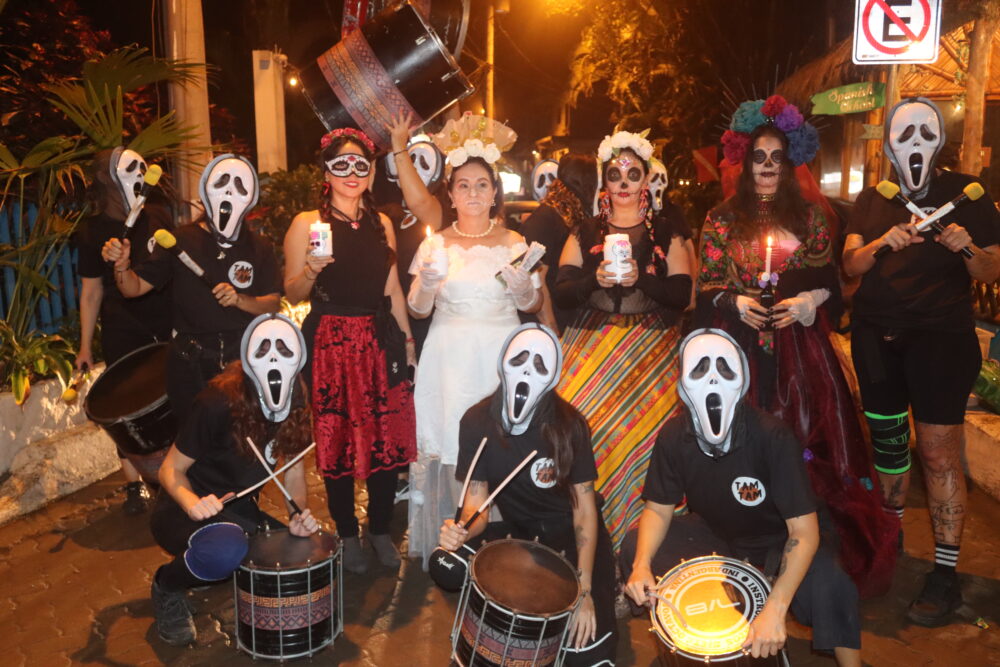
Learning spanish for free while learning about Latin American traditions.
Did you know that in some countries, death isn’t mourned — it’s celebrated?
Today, I’m taking you on a journey through Latin America to discover how different cultures honor their dead… surrounded by flowers, music, sweet bread, and vibrant colors.
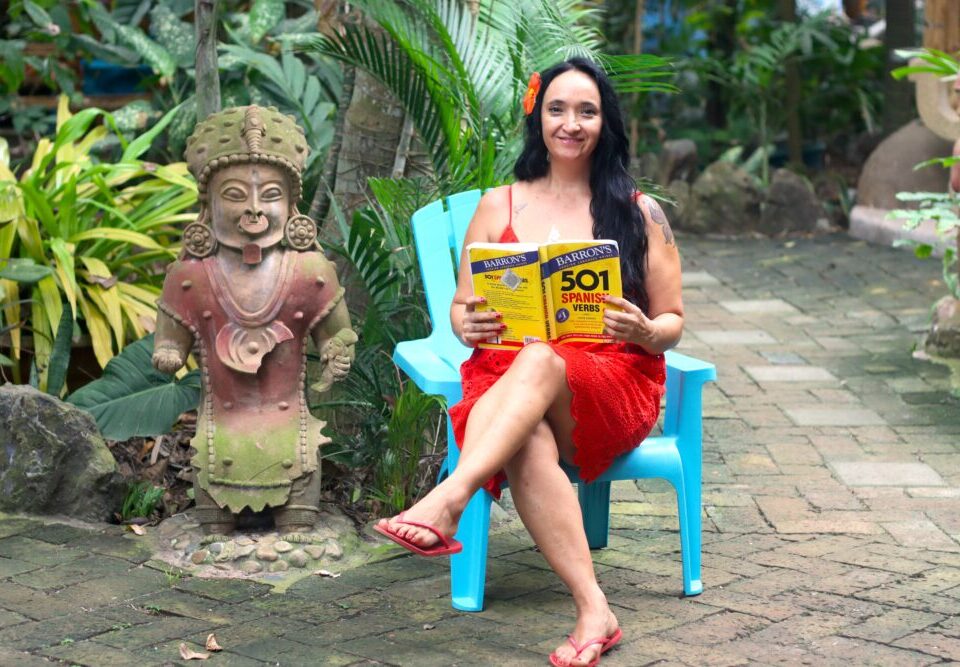
I’m Gabriela Estrella, your Spanish teacher. You’ve probably heard of Día de los Muertos, Mexico’s most famous tradition — but did you know that in Ecuador, Colombia, and Peru we also have our own celebration for the dead? We call it Día de los Difuntos — the word difuntos means “the deceased.” In this episode, I’ll tell you about these traditions that might not be as well-known as Mexico’s, but are just as meaningful to us.
The customs vary from one culture to another, but they’re all equally beautiful and rich in history.
If you would like to practice your spanish with this post, I recommend you to listen my podcast Survival Spanish in Spotify or Apple podcast, today´s episode "Día de los muertos", más allá de la muerte: cómo celebramos el día de los muertos en Latinoamérica, you can find the transcription for this podcast in pdf version attached to this blog at the end.
Latino traditions that can help you to learn spanish for free
To talk about the origin of Día de los Muertos (Day of the Dead), we need to start with something very interesting: its connection to the famous American Halloween.
The celebration on October 31st is quite related to our Latin one, since both focus on death — but in very different ways.
Halloween is a Celtic tradition said to mark the beginning of cold, darkness, and the end of the harvest. It tells of a portal where the dead visit the world of the living, but this visit inspires fear, terror, and panic.
Meanwhile, Día de los Muertos or Día de los Difuntos in Latin America speaks of a portal where the dead visit the earth — but they are welcomed with affection, food, music, colors, drinks, and other traditions.
Perhaps it also carries a more positive influence because, in the Southern Hemisphere, November marks the end of the cold season and the beginning of summer.
Learning spanish while learning about Latin American traditions.
Although it’s hard to define the exact origin of these traditions, we know they are a mix — a fusion between the celebrations of ancient Mesoamerican civilizations (like the Mexica), who believed death was only a transition and that on special dates the dead could return to the world of the living (long before the arrival of the Spanish), and the influence of the Catholic Church, which celebrated All Saints’ Day or All Souls’ Day on November 1st and 2nd.
Even that Catholic tradition doesn’t have a clear origin but also pays tribute to the dead.
Like every tradition, it has evolved and adapted over time.
Today, we’re not going to discuss its origins, but rather explore the unique ways each Latin American country celebrates it.
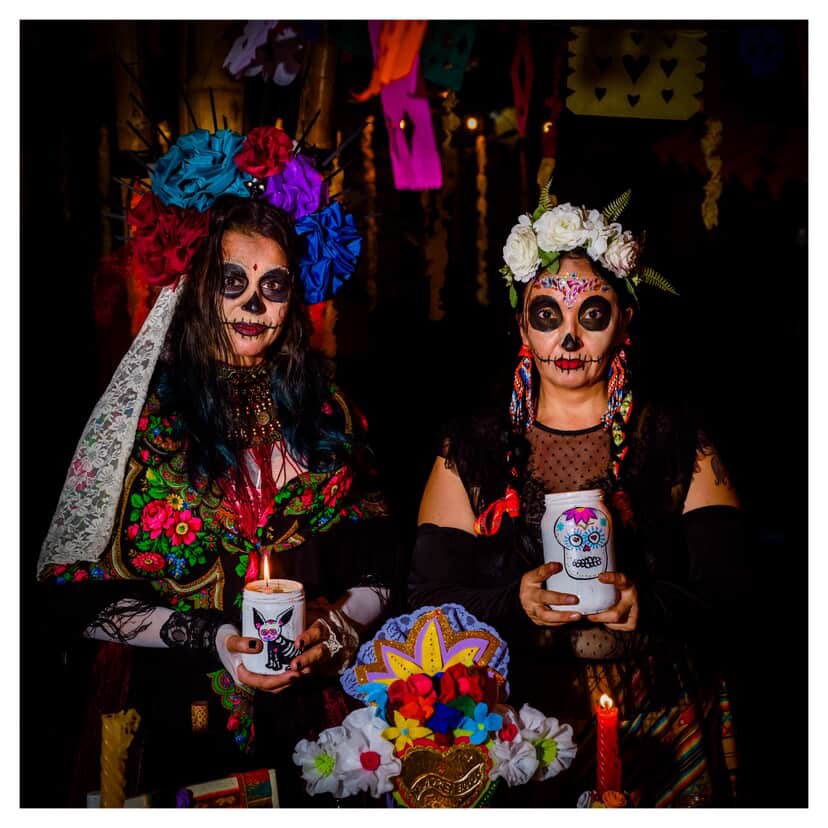
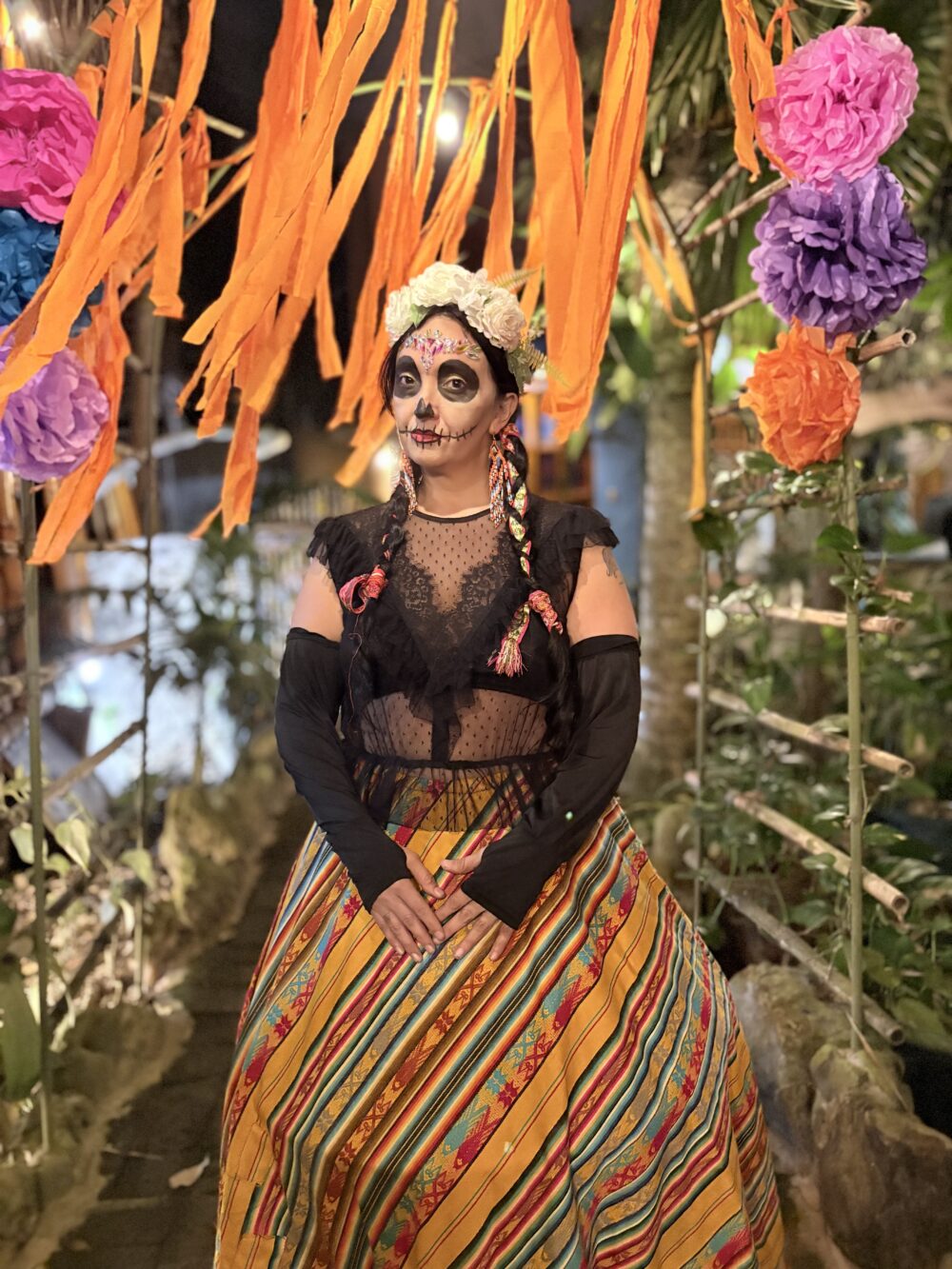
First of all, I have deep respect for Mexico’s Día de Muertos tradition. From late October to early November, Mexicans make various offerings and activities — altars, catrinas, and ofrendas to welcome the dead who come to visit, share time with their families, and enjoy their favorite foods. Everything is decorated with colorful flowers and candles, so that the souls don’t lose their way and have a safe journey after death.
The altars include photos, water, food, and flowers to remember our loved ones.
The catrinas, now very popular symbols, were originally created as social criticism of the culture, but today they also represent death, society, and the celebration of life.
In Mexico, to die means to transcend — and that vision is truly beautiful.
If you want to learn more about this wonderful Mexican tradition, I invite you to watch the movie Coco. This Disney story teaches a lot in a fun and touching way — and if you watch it in Spanish, even better! You can practice your Spanish while enjoying a super sweet story about Coco’s family. I 1000% recommend watching it!
Now that we’ve talked about the most well-known tradition, let’s learn more about the others.
How to Learn Spanish for free using traditions?
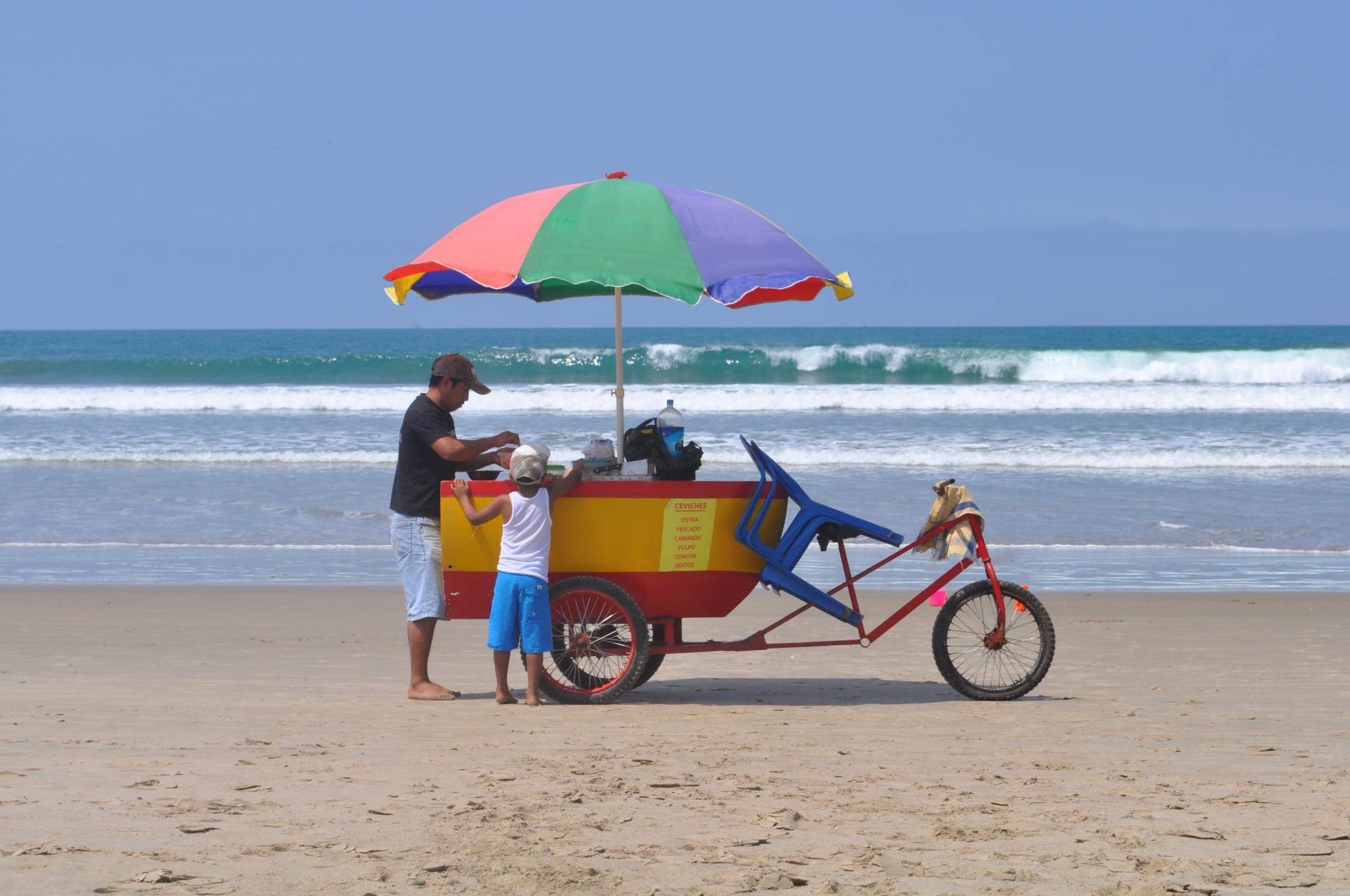
A simple answer, travel around and live the real traditions, in Colombia, Ecuador, and Peru, the traditions are quite similar. They begin with preparations on November 1st, when families cook all the favorite foods of their deceased relatives. In Colombia and Ecuador, this includes the famous Colada Morada — a drink made from purple corn, herbs, and fruits, served hot — along with Guaguas de Pan.
Let me explain.
Colada Morada has its roots in pre-Columbian rituals and symbolizes the cycle of life and death, representing the connection with ancestors. It’s red or dark purple — a color similar to blood — but sweet.
In Kichwa, it’s called Yana Api, meaning “the beginning of a new cycle of life,” of planting and harvest. In the past, it even included llama blood.
For the Andean worldview, this drink is an offering to the dead. It has about 24 ingredients, and its preparation varies by region.
It’s shared among family, friends, and neighbors as a sign of respect and friendship.
The Guaguas de Pan are the traditional companions to Colada Morada. These breads are shaped like human figures (usually women or children) and decorated with bright colors. There are various interpretations of their meaning — the most common is that they represent innocent children who died at birth, which explains the word guagua, meaning “child” in Kichwa. Others believe they symbolize fertility and rebirth.
Learning spanish for free is simple if you learn through the culture!
Additionally, on the day of preparation, families cook all the favorite dishes of their deceased loved ones.
Then comes the cemetery visit, where graves are decorated with candles and flowers, and families share the prepared food together.
In some regions, there are prayers, priest visits, and group blessings at the cemetery. At night, everyone must leave the cemetery to give the souls time to eat and drink.
People also dress in black during these days — you can see these traditions especially in the mountains or Andean regions.
On Ecuador’s coast, for example, each town organizes the famous Mesa de Muerto (“Table of the Dead”), where every family prepares traditional dishes and shares them freely with the whole community, creating long tables full of color, flavor, and even contests to find the most original guagua de pan.
Overall, in Colombia, Ecuador, Peru, and Bolivia, this date is a deeply family-oriented and spiritual one, with similar traditions — though the names vary by region.
For example, Colada Morada in Peru is called Chicha Morada (with the same ingredients), and Guaguas de Pan are known as Pan Wawa — “wawa” also means child, but in Quechua.
In Bolivia, they similarly prepare tables with bread, fruit, and dough figures called Tantawawas.
Across Latin America, this date reminds us that death is not the end — it’s part of the cycle.
We celebrate memory, family, and life itself.
It’s not a day to fear death, not a day of horror — it’s a day of celebration, because for 24 hours our loved ones can share with us food, drink, and music.
“When you learn Spanish, you also learn to see life —and death— through the eyes of another culture.”
Learning Spanish also means understanding this: how a language holds within it an entire way of seeing the world.
If you loved this cultural journey, I invite you to keep learning with me.
Join my Spanish courses on the beach in Montañita or get ready online for your next adventure across Latin America.
Follow me on social media to discover more tips, expressions, and Latin traditions — told in a fun and authentic way.
🎧 Subscribe to the Survival Spanish LATAM podcast and share this episode with your travel-loving friends.

 EN
EN  DE
DE